Perimeter Security Built for Rural Properties
Chain-Link Fence Installation in Cyril for livestock containment and property boundaries across Caddo and Comanche County
Chain-link is one of the most common fence types across rural properties in south-central Oklahoma, relied on for livestock containment and perimeter security along county roads and agricultural land. Bottom tension wire run correctly prevents ground animals from pushing under and keeps the fence taut through Oklahoma's ground-heave freeze cycles, but it's also the detail most often skipped by crews rushing to finish. 4 Feathers Fencing & Contracting LLC includes tension wire as standard practice on every chain-link installation in Cyril, following American Fence Association specifications for brace posts, tie spacing, and wire tensioning.
Chain-link installation involves setting terminal and line posts to the correct depth, stretching fabric to proper tension, and running bottom wire to prevent sagging and ground-level breaches. Brace posts are placed at corners and gates to absorb the lateral force from tensioned fabric, and ties are spaced to prevent fabric from pulling away from the top rail during high-wind events.
Arrange a site visit to review your perimeter needs and receive a specification-based estimate for chain-link installation.
Why Tension Wire Matters for Oklahoma Soil
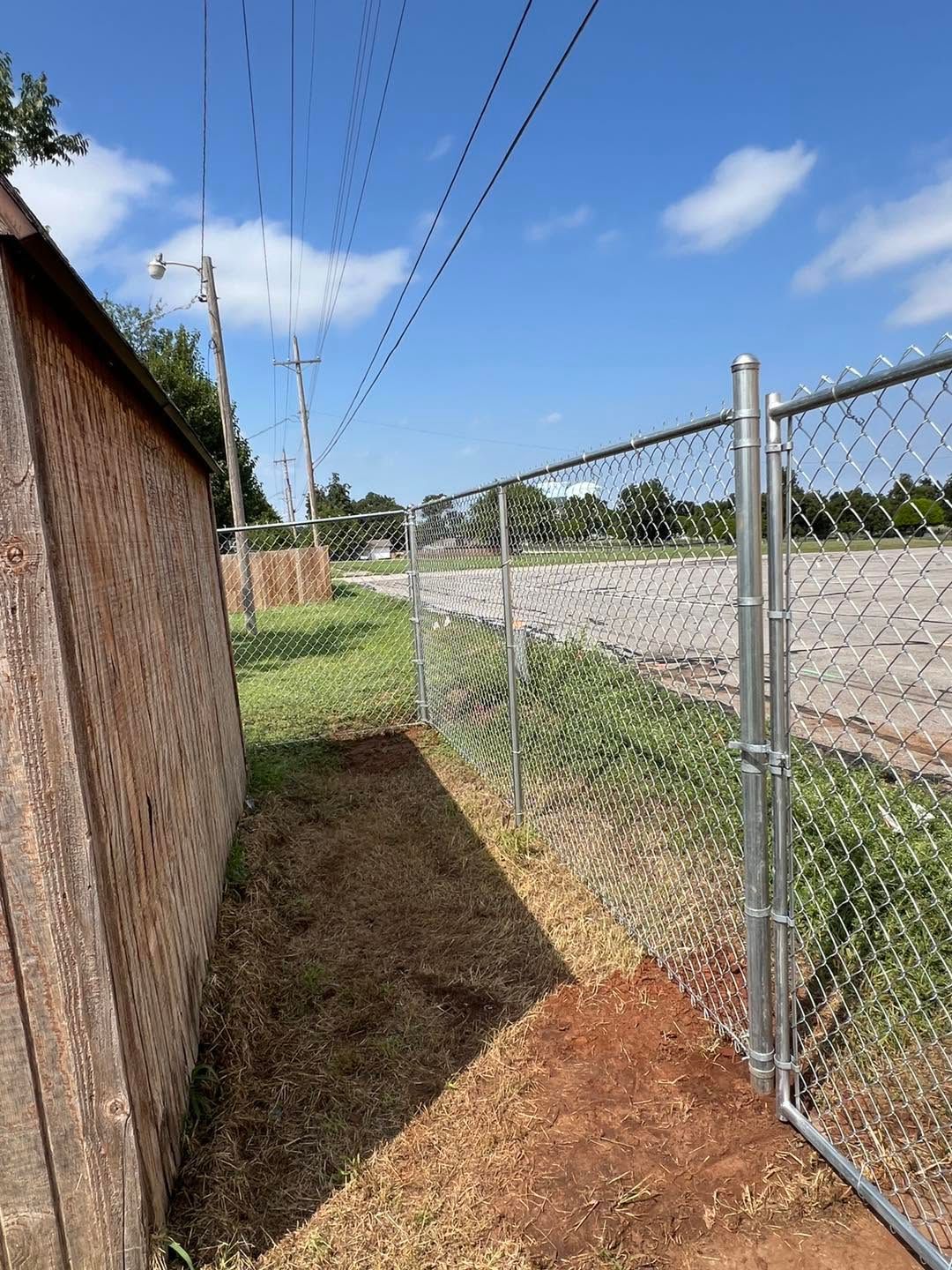
Bottom tension wire keeps chain-link fabric taut at ground level, preventing animals from pushing under and preventing the fabric from sagging as Oklahoma's clay soil expands and contracts through wet-dry and freeze-thaw cycles. 4 Feathers Fencing & Contracting LLC runs tension wire on every chain-link job as part of the AFA-standard installation process, not as an upsell or optional add-on. Brace posts, tie spacing, and tension levels are set to match the property's use and exposure.
After installation, you notice fabric that stays tight to the ground without gaps, posts that remain plumb through seasonal soil movement, and a fence line that holds livestock or marks boundaries without needing re-tensioning after the first wet season. The tension wire prevents ground-level breaches, the fabric is stretched correctly to avoid sagging, and the whole structure is anchored to resist both wind load and animal pressure.
This is chain-link done right—not just stretched and staked, but properly tensioned and anchored for Oklahoma soil and weather conditions. The owner installs every job to the same standard, whether it's a backyard dog run or a multi-acre livestock perimeter.
Questions Before Starting Your Project
Property owners across Cyril and surrounding counties frequently ask about tension wire, post spacing for livestock, and what separates a chain-link fence that lasts from one that sags in two years.
What does bottom tension wire do for a chain-link fence?
Tension wire runs along the bottom of the fabric and is tied at intervals to prevent the fence from sagging or pulling away from the ground, which stops animals from pushing under and keeps the fabric taut through soil movement.
How far apart are posts set for a livestock chain-link fence?
Post spacing depends on fabric height and intended use, but terminal posts at corners and gates are always braced to handle the lateral force from tensioned fabric, and line posts are spaced to prevent sagging between supports.
What makes Oklahoma soil harder on chain-link than other climates?
Clay soil expands when wet and contracts when dry, creating ground heave that shifts posts and loosens fabric tension if posts aren't set deep enough or if tension wire isn't used to stabilize the bottom.
When should I install a chain-link fence for livestock?
Scheduling during dry periods makes post-setting and fabric stretching easier, but proper technique allows installation year-round as long as ground conditions permit digging and concrete work.
Why is AFA standard installation important for chain-link?
American Fence Association standards specify post depth, brace placement, tension wire use, and tie spacing to create a fence that resists sagging, leaning, and fabric separation—the common failure modes for chain-link installed without proper technique.
4 Feathers Fencing & Contracting LLC installs chain-link fencing the correct way every time, using AFA standards and nearly ten years of Oklahoma fencing experience to deliver a fence that holds up to livestock pressure, ground movement, and wind load. Request a property assessment to review your perimeter requirements and receive a straightforward estimate based on the right installation method for your land.