Rust-Resistant Fencing Without Constant Upkeep
Aluminum Fence Installation in Cyril for residential properties where corrosion resistance matters
Oklahoma's humidity, red-dirt moisture, and seasonal temperature swings accelerate corrosion on steel and iron fencing, turning maintenance into a recurring expense. Aluminum holds up without the surface rust and finish deterioration that steel demands you address every few years, and the material's lighter weight does not compromise structural performance when post anchoring and panel connection methods are matched to the installation site. 4 Feathers Fencing & Contracting LLC applies the same quality-first approach to aluminum that defines every fencing project—post depth and panel spec are determined by your property's conditions, not by cutting costs or simplifying installation.
The installation process includes setting posts to depths that account for Oklahoma clay soil movement, connecting panels with fasteners and brackets designed for aluminum's thermal expansion rate, and selecting panel styles that provide the boundary definition or security your property requires. Aluminum does not rust, but it will corrode if dissimilar metals are used in connections or if fasteners create galvanic reactions, so hardware selection matters as much as panel quality. Nearly 10 years of fencing experience and AFA standards guide these decisions because shortcuts on lightweight materials show up quickly in wind events or after the first season of ground movement.
Schedule a property evaluation to review aluminum options and post requirements for your site.
What Changes Once Aluminum Fencing Is Complete
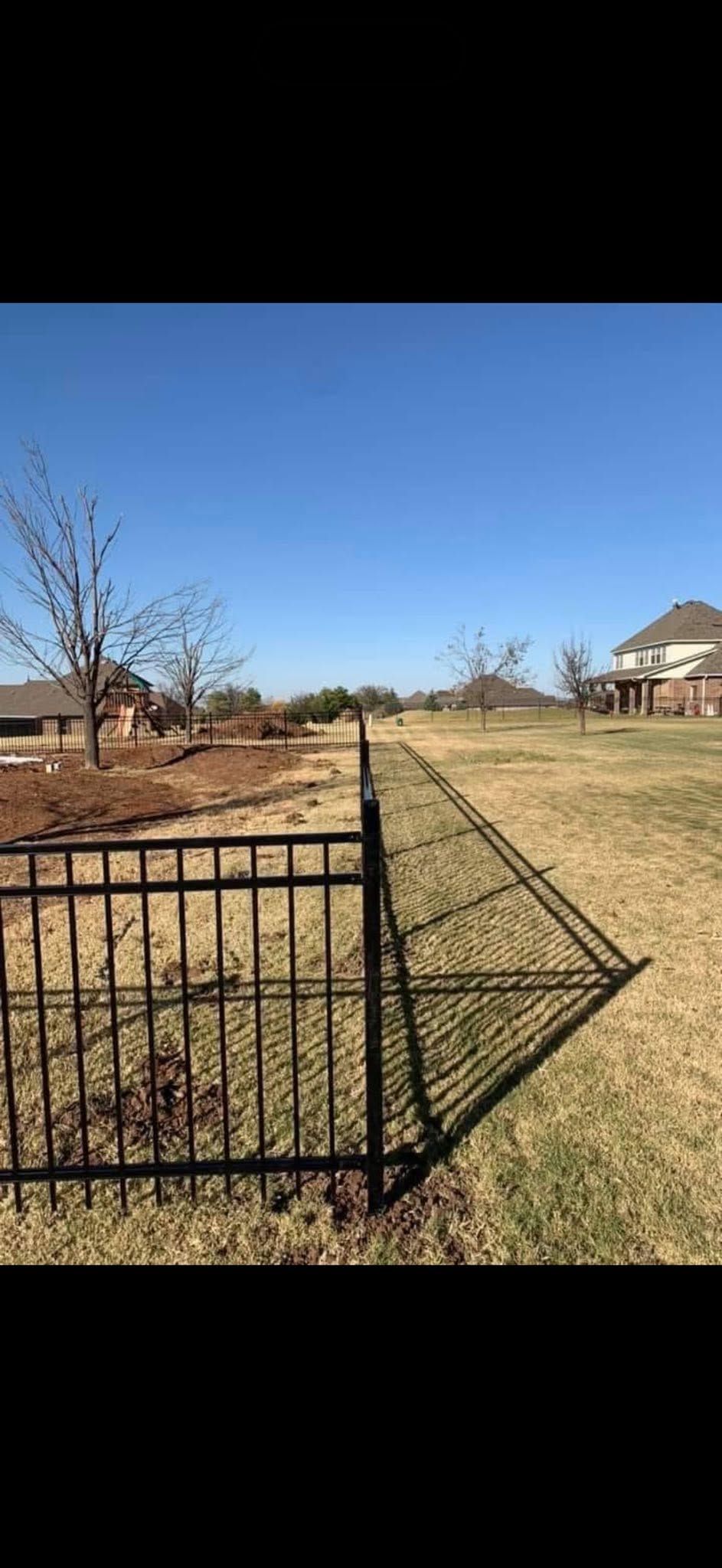
Post anchoring and panel connection details determine whether aluminum fencing remains stable through Oklahoma wind and soil conditions, even though the material itself resists corrosion better than heavier alternatives. Posts must be set deep enough to prevent shifting as clay soil expands and contracts, and panel brackets must allow for thermal movement without binding or loosening at connection points. Properly installed aluminum maintains alignment and spacing because the installation method accounts for the forces the fence will face, not just the static load of the panels themselves.
You will notice fencing that stays clean and maintains its finish without the rust staining or surface degradation common on steel, panels that remain level and plumb through seasonal weather changes, and connections that do not show stress or loosening after wind events. The low-maintenance character of aluminum is only realized when the installation itself is done correctly—poorly anchored posts or incompatible hardware create maintenance problems that the material alone cannot prevent.
Aluminum fencing also accommodates a range of panel styles and heights, so the installation can match both functional requirements and aesthetic preferences without requiring custom fabrication. Post spacing is adjusted to site conditions and panel design, and gate hardware is selected to handle the lighter weight of aluminum gates without over-engineering or under-supporting. The result is a clean, low-maintenance boundary that performs structurally while requiring far less upkeep than heavier ferrous materials.
Answers to Frequent Aluminum Fencing Questions
Homeowners across Cyril and south-central Oklahoma communities often want to understand how aluminum compares to other materials and what installation details matter before making a decision.
How does aluminum fencing perform in Oklahoma wind conditions?
Aluminum's lighter weight reduces wind load compared to heavier materials, but proper post depth and panel connection method are still required to prevent movement or damage during high-wind events common in tornado-corridor locations.
What makes aluminum more corrosion-resistant than steel or iron?
Aluminum forms a protective oxide layer that prevents further corrosion, while steel and iron rust progressively when exposed to moisture and oxygen—this makes aluminum particularly suitable for properties with high humidity or poor drainage where steel would require frequent recoating.
Why does hardware selection matter for aluminum installations?
Dissimilar metals in contact with aluminum create galvanic corrosion, so fasteners and brackets must be aluminum or coated to prevent electrochemical reactions that degrade connections over time—using the wrong hardware eliminates the corrosion resistance the material provides.
How is post depth determined for aluminum fencing on clay soil?
Even though aluminum panels are lighter, posts still shift if not anchored below the active clay layer that expands and contracts with moisture—post depth depends on soil conditions at your specific property, not on panel weight alone.
What is included in a typical aluminum fence installation?
Installation includes site layout, post setting with concrete footings, panel attachment with appropriate hardware, gate installation with hinges and latches matched to aluminum, and final alignment to verify plumb and level across the entire fence line.
4 Feathers Fencing & Contracting LLC is owner-operated, and every aluminum installation receives the same structural attention and material care that longer-lasting fencing requires. Request an on-site estimate to review your property and receive straightforward pricing based on what the job actually requires.